

When you picture a tattoo in your mind, there’s a good chance you’re thinking of American Traditional tattoo style—those thick black lines, punchy colors, and images that have been on people’s skin for generations. This isn’t some passing trend. It’s the real deal, born from sailors, bikers, and working folks who needed their ink to mean something and last forever.
American Traditional tattoos are still going strong because they look good, they age well, and they tell stories that don’t need explaining. If you’re into bold colors and symbols that pack a punch, these seventeen designs are where it’s all at.
American Traditional Tattoo History: Where Bold Lines Were Born
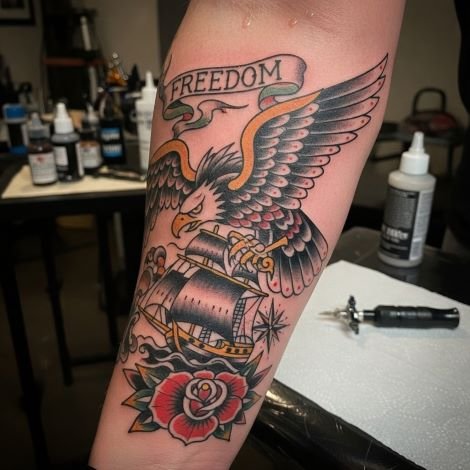
American Traditional tattooing emerged in early 1900s port cities where sailors got inked with anchors, swallows, and ships. Norman “Sailor Jerry” Collins perfected the style in the 1930s-1970s, creating the thick black outlines, limited color palette (red, yellow, green, blue, black), and bold designs we know today.
World War II made it explode—millions of servicemen got eagles, pin-ups, and memorial tattoos. The style went underground in the 1960s-1980s with bikers and outlaws, then revived in the 1990s.
It’s lasted over a century because thick lines don’t blur, solid colors hold up, and the symbols are timeless. It’s tradition, not trends.
What Makes a Tattoo “American Traditional”?
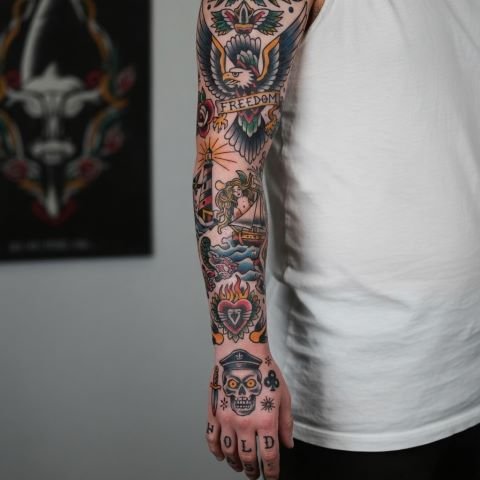
American Traditional—some people call it Old School or Western Traditional—has a look you can spot from across the room:
What You’ll See:
- Thick black outlines: Lines that hold up for life, not wimpy scratches that blur out
- Classic colors: Red, yellow, green, blue, and black—that’s it. No pastels, no rainbows
- Clean, simple shading: Strong contrast without fancy blending
- Symbols with history: Images from sailor life, war, rebellion, and old superstitions
- Flat look: These tattoos sit on your skin like a poster, not a photograph
This style came up in American tattoo shops during the early and mid-1900s. Norman “Sailor Jerry” Collins is the name everyone knows—he took what sailors were getting inked with and made it sharper, bolder, and better. He learned from Asian tattoo masters and mixed it with American grit, creating something that stuck around.
What makes American Traditional work is that it’s built to last. These tattoos were made to be seen clearly and to stay looking good when your skin gets older and looser.
American Traditional Eagle Tattoo
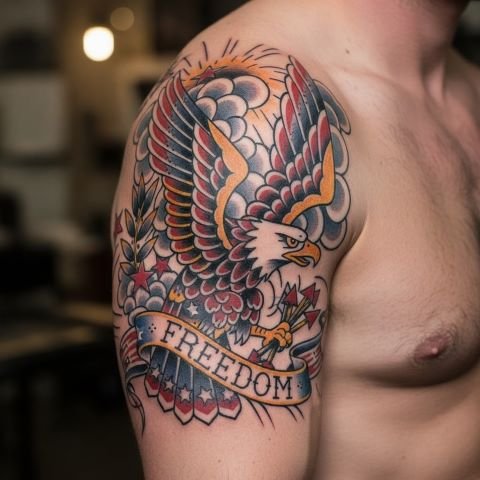
The eagle is a powerhouse symbol in American Traditional tattooing, representing freedom, strength, and patriotism. Often depicted with spread wings, clutching arrows or banners, the eagle commands attention and respect.
Symbolic Meaning: National pride, courage, freedom, military service
Best Placement: Chest, back, upper arm, or thigh—anywhere that can accommodate the wingspan
American Traditional Wolf Tattoo
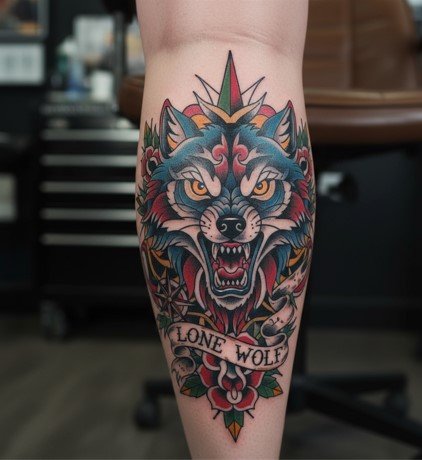
The wolf embodies loyalty, instinct, and the wild spirit. In traditional style, wolves are rendered with fierce expressions and bold silhouettes, often howling at the moon or in aggressive stances.
Symbolic Meaning: Loyalty to family or pack, survival instinct, independence
Best Placement: Forearm, calf, shoulder, or ribcage
American Traditional Flower Tattoo
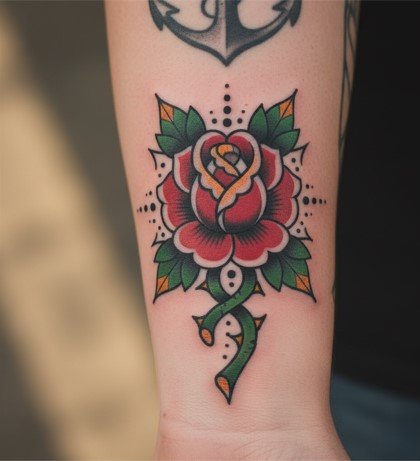
Floral designs in American Traditional work aren’t delicate—they’re bold and graphic. Roses dominate, but chrysanthemums, peonies, and lotus flowers also appear with thick petals and strong stems.
Symbolic Meaning: Varies by flower—roses represent love and passion, while other blooms carry meanings from beauty to renewal
Best Placement: Anywhere, but especially popular on arms, shoulders, and as filler between larger pieces

American Traditional Hand Tattoo

Hand tattoos in this style often feature daggers, roses, spiderwebs, or single bold symbols. They’re visible statements that require commitment and confidence.
Symbolic Meaning: Depends on imagery—often represents toughness, rebellion, or personal milestones
Best Placement: Back of hand, fingers, or knuckles (note: highly visible and may affect employment in some fields)
American Traditional panther Tattoo
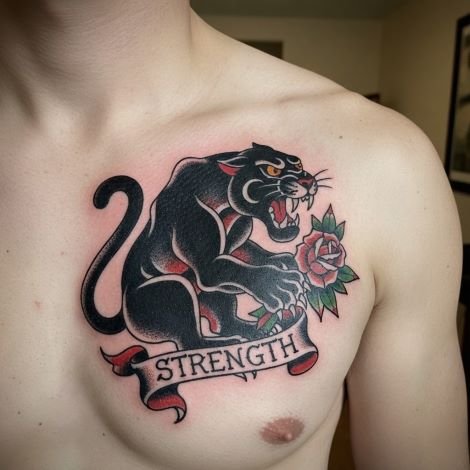
The panther is a classic symbol of power, ferocity, and protection. Typically shown prowling, snarling, or mid-pounce with exaggerated muscles and dramatic poses.
Symbolic Meaning: Courage, protection, fighting spirit, overcoming adversity
Best Placement: Shoulder, chest, thigh, or back
American Traditional Dagger Tattoo
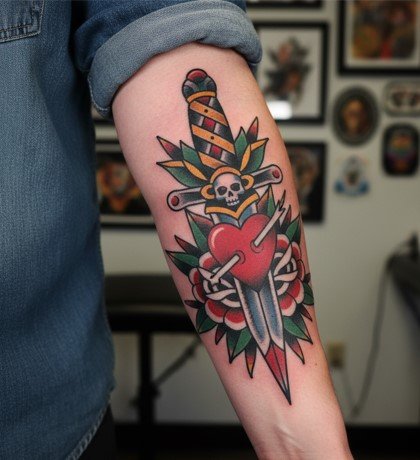
Daggers represent betrayal, danger, or fighting through hardship. Often piercing through hearts, snakes, or flowers, the dagger is one of the most versatile traditional designs.
Symbolic Meaning: Loss, betrayal, sacrifice, or mental toughness
Best Placement: Forearm, leg, or combined with other imagery on the chest or back
American Traditional Anchor Tattoo
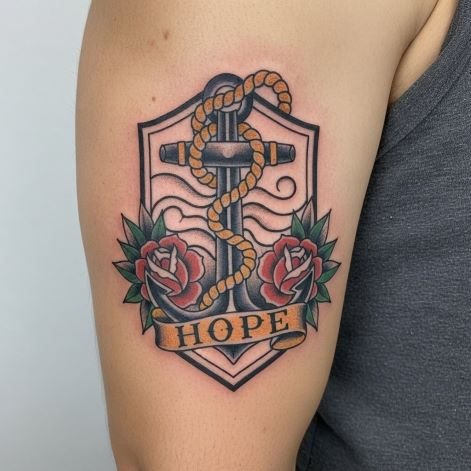
A sailor’s staple, the anchor symbolizes stability, grounding, and safe return home. Anchors are often paired with ropes, ships, or banners bearing names or dates.
Symbolic Meaning: Stability, hope, steadfastness, naval service
Best Placement: Forearm, bicep, calf, or chest
American Traditional Swallow Tattoo
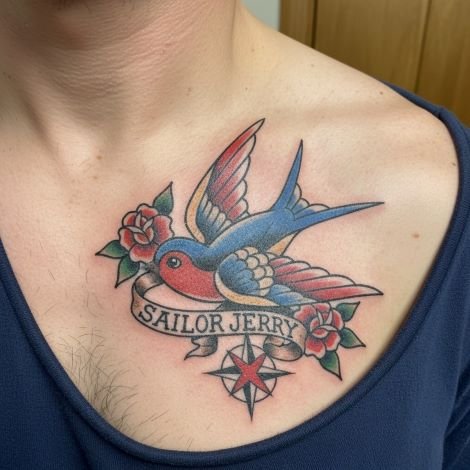
Swallows were traditionally tattooed by sailors who had traveled 5,000 nautical miles. These birds symbolize safe return, loyalty, and freedom.
Symbolic Meaning: Safe journey, loyalty to home, freedom, new beginnings
Best Placement: Chest, shoulders, hands, or neck
American Traditional Skull Tattoo
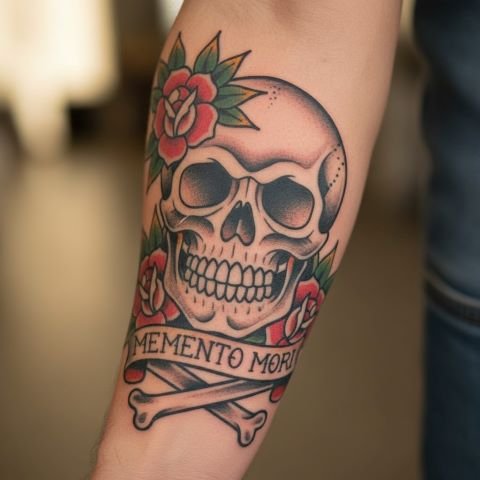
Skulls in traditional work aren’t necessarily morbid—they represent mortality, fearlessness, and living life fully. Often paired with roses, snakes, or daggers.
Symbolic Meaning: Mortality, living without fear, remembrance, rebellion
Best Placement: Upper arm, chest, leg, or as part of a sleeve
American Traditional Pin-Up Girl Tattoo
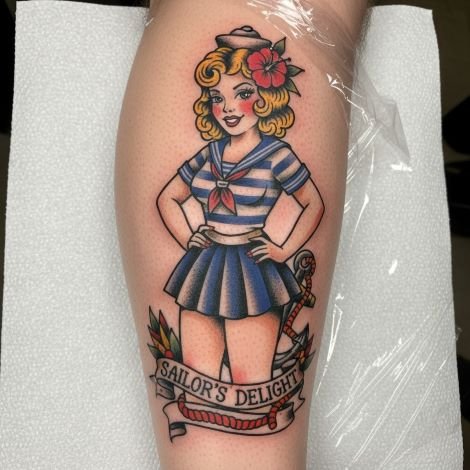
Pin-up girls celebrate beauty, femininity, and nostalgia for mid-century Americana. These tattooed ladies often appear in playful poses with vintage clothing and hairstyles.
Symbolic Meaning: Appreciation of beauty, nostalgia, luck, companionship during deployments
Best Placement: Thigh, upper arm, calf, or back
American Traditional Ship Tattoo
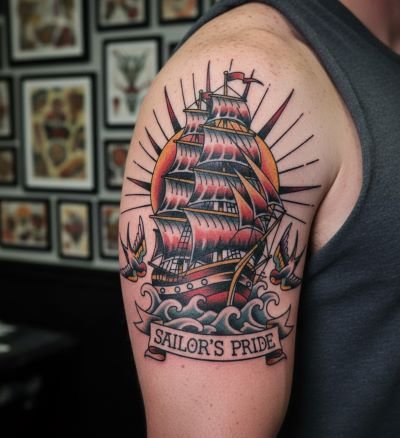
Ships represent adventure, navigation through life’s storms, and a sailor’s trade. Fully rigged ships with billowing sails are among the most detailed traditional pieces.
Symbolic Meaning: Journey, navigation through challenges, wanderlust, naval heritage
Best Placement: Chest, back, or outer thigh
American Traditional Rose Tattoo
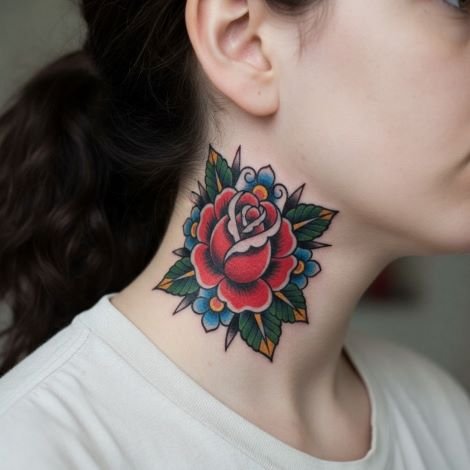
The rose is the quintessential traditional flower—bold petals, thorny stems, and rich red color. It can stand alone or accompany nearly any other design.
Symbolic Meaning: Love, passion, beauty, balance between pleasure and pain
Best Placement: Anywhere—extremely versatile and popular as gap filler
American Traditional Halloween Tattoo
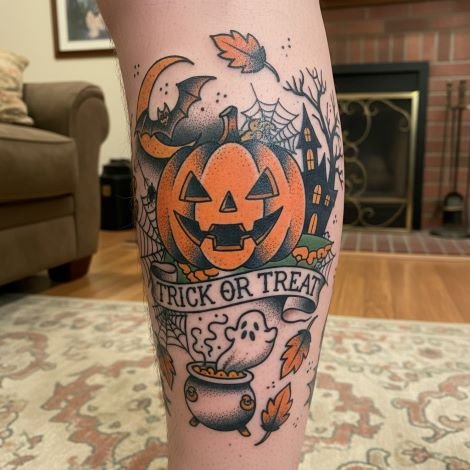
Black cats, jack-o’-lanterns, witches, bats—Halloween stuff fits traditional style perfectly with those bold lines and limited colors. These designs are for people who dig the spooky side of life.
What It Means: Embracing the dark side, superstition, loving creepy stuff
Where to Put It: Arm, leg, or as part of a themed sleeve
American Traditional Snake Tattoo
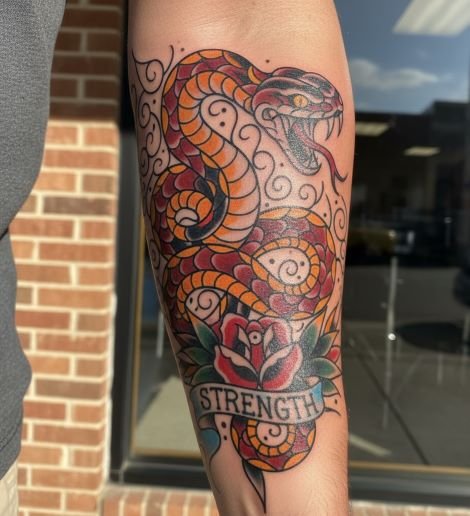
Snakes are powerful symbols of change, danger, and wisdom. They’re often wrapped around daggers, skulls, or apples, adding movement to the design.
What It Means: Rebirth, temptation, danger, wisdom, transformation
Where to Put It: Wrapping around arms or legs, chest, back
American Traditional Owl Tattoo
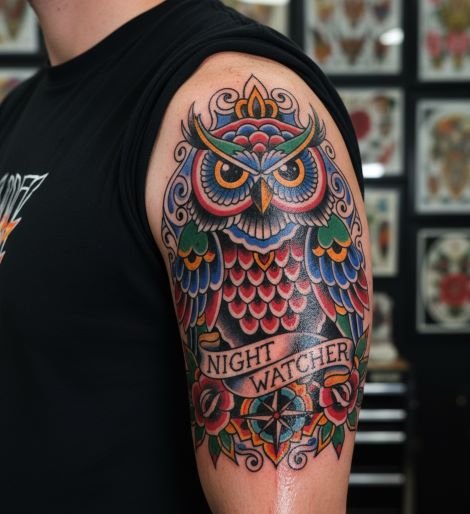
Owls represent wisdom, mystery, and protection. In traditional work, they’re depicted with large, bold eyes and spread wings.
Symbolic Meaning: Wisdom, knowledge, protection, connection to the night
Best Placement: Chest, back, thigh, or upper arm
Traditional Native American Tattoo
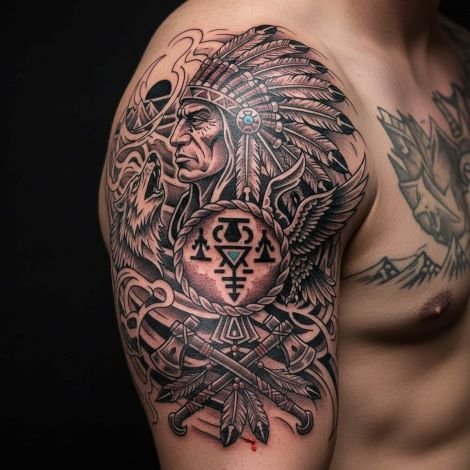
These designs pay homage to Indigenous American imagery—headdresses, dreamcatchers, and portraits. However, it’s crucial to approach these respectfully and understand their cultural significance.
Important Note: Native American imagery carries deep cultural and spiritual meaning. If you’re not of Indigenous descent, carefully consider whether these designs are appropriate for you and consult with Indigenous artists and communities. Cultural appreciation should never become appropriation.
Symbolic Meaning: Heritage, spirituality, connection to nature (context-dependent)
Best Placement: Upper arm, back, or chest
American Traditional Heart Tattoo
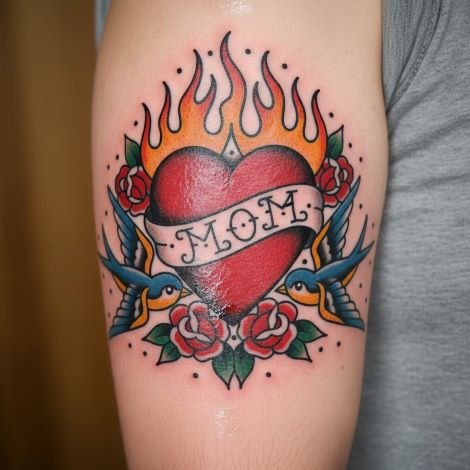
The heart—often pierced with arrows, wrapped in banners, or aflame—is a cornerstone of traditional tattooing. It represents love in all its forms: romantic, lost, or enduring.
Symbolic Meaning: Love, passion, heartbreak, dedication, memorial
Best Placement: Chest, upper arm, forearm, or anywhere visible
Why These Designs Never Go Out of Style
American Traditional tattoos have been around for almost a hundred years because they’re real. These designs came from actual experiences—sailors marking their travels, soldiers commemorating battles, working people claiming their identities through permanent art.
These tattoos stick around because they’re connected to the roots of tattooing in America. The symbols are straightforward and everyone gets them without needing an explanation.
People are getting back into American Traditional for a few reasons:
- They age like fine wine: Thick lines and solid colors stay clear when your skin changes
- They don’t look dated: No risk of looking back in ten years and cringing
- They’re authentic: Connected to real tattoo history, not Instagram trends
- They look great in photos: High contrast pops in pictures
When everyone’s getting watercolor splashes and hyper-realistic portraits, there’s something refreshing about a solid traditional piece. It doesn’t pretend to be anything else—it’s bold, honest, and in your face.
Tips for Getting an American Traditional Tattoo
Find the Right Artist
Every tattoo artist has their thing. You want someone who specializes in American Traditional and has a portfolio full of clean lines, solid colors, and classic designs. Check that their lines are consistent and their color looks strong.
Stick to the Color Rules
American Traditional uses red, yellow, green, blue, and black for a reason—those colors last. Don’t ask your artist to throw in purple or pink or whatever. Trust what works.
Think About How It’ll Age
Traditional designs were made to age well. Thick outlines don’t blur, and solid colors hold up better than fancy shading. When you’re picking size and placement, remember these tattoos look better a bit bigger—too small and they lose their punch.
Pick Something That Matters
Choose an image that means something to you but has universal appeal. You don’t owe anyone an explanation for your tattoo, but it should matter to you in a way that’ll stick around. The good thing about traditional symbols is they mean different things to different people while still being recognizable.
Don’t Try to Reinvent It
Stick with classic compositions instead of trying to make the style “modern” or “unique.” American Traditional’s power is in keeping it pure and not messing with what works.
Aftercare for Traditional Tattoos
Taking care of your tattoo right keeps those lines crisp and colors bright:
First 2 Weeks
- Wash it: Use unscented soap 2-3 times a day
- Moisturize: Thin layers of unscented lotion or tattoo balm
- No soaking: Skip swimming, hot tubs, and long baths until it’s healed
- Don’t pick at it: Let scabs and dry skin fall off on their own
- Protect from sun: Cover it up or use high SPF once it’s healed
Long-Term
Thick lines and solid colors in traditional tattoos last really well, but you’ve got to take care of them:
- Keep it moisturized: Lotion daily
- Sun protection: UV rays fade colors—use SPF 30 or higher when you’re outside
- Stay hydrated: Drink water for healthy skin
- Touch-ups: Even great traditional tattoos might need minor touch-ups after years
What to Use: Unscented lotions like Lubriderm or Aveeno, tattoo aftercare stuff like Hustle Butter or After Inked, and mineral sunscreen for healed tattoos.
When you take care of American Traditional tattoo work, it can look sharp for decades. Those thick lines and solid colors fight fading way better than fine-line or super detailed tattoos.
What colors are used in American Traditional tattoos?
American Traditional sticks to red, yellow, green, blue, and black. That’s it. This color scheme started partly because these pigments lasted the longest and partly because high contrast makes bold, clear designs. Some modern artists might add a touch of other colors here and there, but if you want it done right, stick with the original five.
Who invented this tattoo style?
The style evolved gradually through the early and mid-1900s, but Norman “Sailor Jerry” Collins is the guy who really nailed it down. Working in Hawaii, Sailor Jerry mixed American tattoo traditions with techniques from Japanese masters, creating the bold style we know today. Other big names include Bert Grimm, Cap Coleman, and Paul Rogers.
Do American Traditional tattoos fade faster?
Nope, the opposite. American Traditional tattoos age better than most other styles because of those thick black outlines and solid colors. The heavy lines stop blurring as your skin changes, and the classic colors hold their intensity. Fine-line, watercolor, and super detailed tattoos usually fade more noticeably. With proper care and sun protection, American Traditional can look sharp for your entire life.
How much do American Traditional tattoos typically cost?
It depends on size, placement, how experienced the artist is, and where you live. Small traditional pieces might start around $100-$200, while bigger designs can run from $500 to a few thousand dollars. Experienced traditional artists charge more because the style takes real skill. Remember that quality traditional work is worth paying for—these tattoos will look good forever when done right.
Can I add color to a black and grey Traditional tattoo later?
Yeah, you can add color to existing black and grey traditional work. The black outlines are already there, so a good artist can fill in traditional colors between the lines. Just make sure you talk to an experienced traditional artist who can check if your existing tattoo is good for adding color while keeping the style intact.
Final Thoughts
Old-school tattoos aren’t about what’s cool right now—they’re about who you are, what you’ve been through, and what matters to you. American Traditional tattoo designs have lasted because they speak a language everyone understands about courage, love, loss, and being human.
Whether you’re drawn to a fierce panther, a steadfast anchor, or a bold rose, these seventeen designs represent the best of classic tattooing. Each one carries decades of history and artistic craft.
The right American Traditional tattoo isn’t just decoration—it’s a statement about who you are and what you stand for. These designs connect you to generations of people who wore their hearts and stories on their skin without apologizing for it.
Pick a design that tells your story. Find an artist who knows their craft. And wear it with the same pride as the sailors, soldiers, and rebels who built this tradition one bold line at a time.